Recap: Super El Niño and Health: Research Priorities and Opportunities
Thank you to all who joined CAFE’s Super El Niño and Health: Research Priorities and Opportunities panel on October 21, 2026! If you missed it, or want to revisit key points, here’s a recap:
The Forecasted Super El Niño
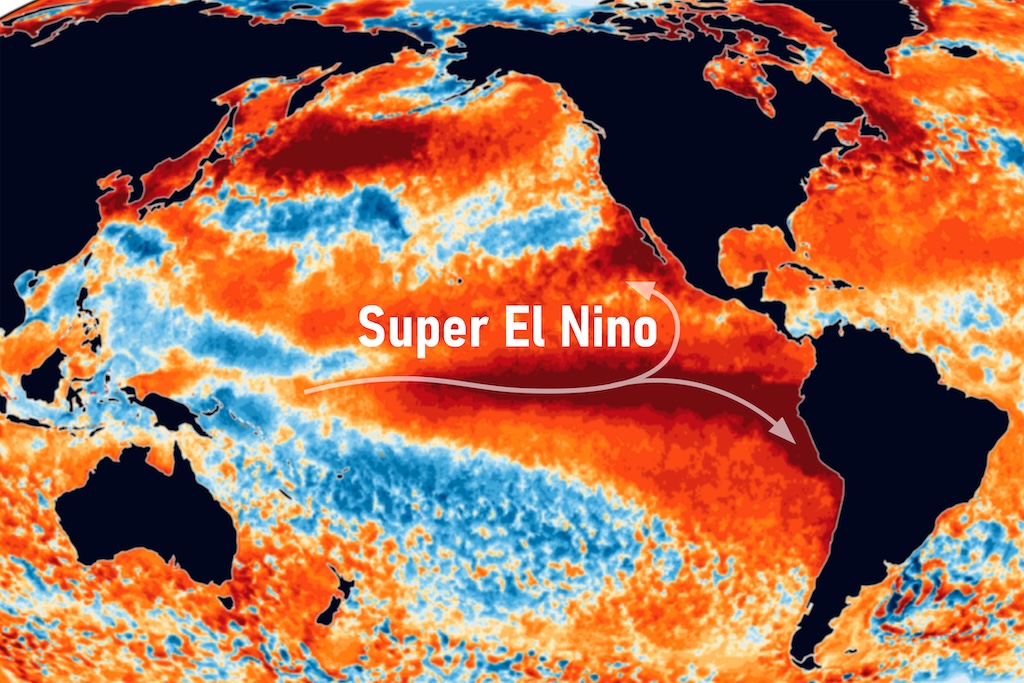
Dr. Erin Coughlan de Perez set the stage by defining what El Niño is, what makes this year’s event a Super El Niño, and what we need to prepare for. She noted that El Niño events influence atmospheric conditions in predictable patterns around the world, which enables more accurate forecasts of global changes in precipitation and temperature. Her challenge for scientists is this: “If we have a good forecast, and if we see this event evolving, what can we do to try and make sure it does not have catastrophic impacts on society?”
Health Impacts and Areas of Concern
The panelists spoke to the wide-ranging impacts of El Niño on health and their concerns for the coming Super El Niño. They noted that increased rates of infectious diseases, wildfire smoke exposure, poor crop returns, and overburdened health systems are associated with El Niño conditions. In addition to these shorter-term health impacts, Dr. Will Checkley highlighted the lasting adverse health effects and trauma associated with El Niño events.
El Niño events also compound hazards, which can make preparedness and response more difficult. Heightened forecasting and documented health impacts don’t always ensure well-implemented solutions. Dr. Yasna Palmerior-Silva spoke of the need for mutli-level prevention efforts and allocating resources when anticipating a Super El Niño event.
Opportunities for Research
El Nino’s improved forecasting provides more opportunity for research and preparedness. For example, the global attention on this Super El Niño event is an opportunity to build stronger surveillance systems. Dr. Quinn Adams explained how investing in local surveillance capacity during this year’s event could improve future forecasting. She also shared some of her own work forecasting the global dengue outlook and studying El Niño's impacts on dengue in Indonesia. There are also opportunities for interdisciplinary research that measure the success of previous interventions.
Dr. David Fisman noted the importance of capturing data to better understand threshold effects and tipping points. The data collected from strong El Niño events can help us challenge assumptions around relationships between health impacts and environmental factors. Dr. Checkley noted opportunities to study how extreme weather events can impact the leading causes of death.
Panelists offered final thoughts on audience questions regarding:
- How forecasting is impacted by non-linearities
- Systems thinking
- Preparing for strong El Niño events in under-resourced communities
- The relationship between mental health and El Niño
Key Takeaways
The strength of this year’s El Niño event provides high levels of accuracy in global weather prediction. Scientists can leverage this information when designing research, which could generate expansive data collection, improved risk assessment, and evidence-informed preparedness.
Panelists
- Quinn Adams, PhD, (Postdoctoral Research Associate, University of Colorado Boulder)
- Yasna Palmeiro-Silva, PhD, (Adjunct Researcher, Universidad Peruana Cayetano Heredia in Peru and the School of Public Health and the Center for Public Policy at the Universidad Católica de Chile)
- David Fisman, MD (Professor of Epidemiology, University of Toronto)
- Will Checkley, MD, PhD (Professor of Medicine, Johns Hopkins University)
- Moderator: Erin Coughlan de Perez, PhD (Associate Professor and Climate Scientist, Tufts University)